Rights of Nature

For our last IENK topic, we focused on the rights of nature within the New Zealand context while spending our last two weeks of the semester there. This particular concept of nature and animals having rights is fairly new to me, I’ve never thought about the process of law reaching beyond the human realm. I assume a lot of that has to do with the society I grew up with and around, stemming from Western beliefs in the separation between human and nature. This dualism has stuck with me since learning about eco feminism and has been playing a huge part in my learning and understanding process since. Within the first reading and the thought of “humanity as the centre of existence” (Burdon, 2009), humans again place themselves above what gives them life and substance to continue living. The hyper-separation continues to drive countries and societies with these Western beliefs towards a future of destruction of the environment around them. These harmful environmental ideals and way of thinking lead to the laws that are then formed. Within the Maori communities that we visited, their values stem from their deep and intimate connection with land and river, which then flow into their treatment of such. Their priority is in maintaining the land and river to be heathy and cared for, they take it as their responsibility and this gives them connection to their culture.

The second reading discusses laws of man and how, “communities have always used laws to express the ideals to which they aspire and to regulate how power is exercised” (Cullinan, 2008). If the environment is not one of the top priorities of a community, there will be little regulation as to what happens to the environment. If the people in power do not recognize negative behaviours affecting the world around them, there will be no change within the policy or decision making process. Yet, for those communities that support a surviving and flourishing environment will treat the environment with respect. This is the case in the Maori communities, working towards and achieving the Whanganui River to be seen as a person and receive the same rights as a person would. This is the among the first steps to changing the way the population sees nature, and places it on the same level as humans, connecting us once again.

One thing that keeps many from connecting to land is the idea of private poverty and ownership. I have grown up without questioning the buying and selling of land, it was always the same as buying and selling a car. Then, throughout my global experience I began to understand the corruption that follows the transaction of land, especially when it was land that was invaded and taken from the original inhabitants to begin with. The ownership of land places humans again on top of the pyramid, again forgetting that the land provides for us and without it, we would not survive. In the process that we treat the land, I remember the performance by the Earth group for our IENK presentations and how they re-enacted the giving tree story. We continue to take and take from what we think we own, and never give back, slowly killing it and not realizing we are dependent on earth and the resources we retrieve from it. The separation we create allows people to not see the environment needs protection from us.

Burdon, P. (2009). Wild law: The philosophy of Earth Jurisprudence. Retrieved from http://ssm.com/abstract=1636564

Cullinan, C. (2008, January 2). If Nature Had Rights. Orion Magazine. Retrieved from https://orionmagazine.org:443/article/if-nature-had-rights/; accessed January 20th, 2015.
Black Rocks Camping Trip

The week 11 reading, Reinventing Eden: Western Culture as a Recovery Narrative by Carolyn Merchant, assigned to go with the Black Rocks camping trip had me feeling all types of emotions. For my past three assignments in Global classes I have been focusing on gender inequality and sexual violence, and this reading was the icing on the cake for everything I could handle in such a short period of time. The separation of women and how they are perceived to be through original eve, fallen eve, and mother nature, made me sick to my stomach. For so long men have sexualized, taken, and exploited women and nature, placing themselves above and separate rather than next to and equal. After glimpsing at sexual violence from multiple the perspectives: politically, economically, environmentally, and culturally, I feel women have been put at a disadvantage for such a long period of time and there’s no way to escape. With religious stories and interpretations at the root, such as the creation of the universe and human in Genesis, expanding to accepted behaviors and beliefs on the genders, the light seems to be at the end of a very long and draining tunnel.

The reading also talked about the taking of land and from the western cultural perspective, the land is there for the taking and recreation of the Garden of Eden. There is the use of technology and science to control nature and tame it to human benefit. Humans stole land from others who didn’t seem fit to handle it, recovered them into parks so they could be set aside as wilderness areas where people can visit but not stay. Control over land is a huge reoccurring topic and connects directly to control over women, men were greedy and needed more, or they were doing god’s work and recreating the garden that was lost by Eve. Then they began creating cities in the garden to expand on the capitalist market, allowing the earth to be destroyed by machines and technologies, but not seeing it as mass destruction, but as creation of a new and improved world. But new and improved does not always mean building up, it could be keeping the same and maintaining. That is what I saw and understood on our camping trip to Black Rock. The preservation of this site by the custodians of the land, allow it to be in the best condition they can keep it in. They protect that land and provide the care and attention it needs. This is their Garden of Eden, their connection to their ancestors, the land that brings them beyond themselves.

Merchant, C. (1996). Reinventing Eden: Western Culture as a Recovery Narrative. In W. Cronon (Ed.), Uncommon Ground: Rethinking the Human Place in Nature (pp. 132-159). New York: W.W. Norton & Company.

Nimbin Rocks

Within the start of Love and Reconciliation in the Forest by Deborah Rose, she begins with a question raised by Mary Graham, “How would we live, as persons and as a society, if we accept that we are in connection and we are not primary?” This beginning question made me think about the inequalities found within different communities, between race, gender, religion. All people within a community share a connection, if it were recognized, those inequalities might not exist. Human connection to others provides a beautiful opportunity to work together and live through love rather than discrimination and hate. Connection is here to bind us together, if we allow it to reach beyond friends and family to our neighbors and strangers, understanding we all share this basic human connection of being, there might be hope in changing societies that break people down.

I have grown up with the mentality to show respect and treat everyone as equal with the reasoning that it was the right and only way to live, especially growing up within the catholic church. I have grown up with the thoughts of having a connection to god or a higher power but never started thinking about a deep connection to land or to strangers until I began the Global experience. I first learned connection and love to strangers when visiting an indigenous group in Costa Rica and spending a week living in their village, the second time I felt that connection was in Waytabu in Fiji. The people in those communities were so connected to others and shared all they had, including their love to those who visited and I believe that stems from their connection with land and nature. They do not have the same history of destruction and exploitation of land, resources, and people, meaning their connection to such was never intentionally broken whilst the European invaders broke that connection within the first taking of land.

In Australia, the Aboriginal peoples are the custodians of the land, there to care for it and allow for it to prosper under the correct conditions, and to keep it from facing destruction by outsiders. On November 1st, our IENK visited a plant nursery maintained by the Ngulingah Local Aboriginal Land Council. From our trip I learned the responsibility felt by those in the area to protect their land and make sure it was in the right hands for care. Their connection extends from the people they share the community with to the land they have grown up on, while allowing others to come in and share that experience of the connection.

One of the things that interest me that day, was when Nigel stopped the bus, had everyone get out and talked to us about the mountains in the view as well as the commune that was created in the area. This was what I thought of during that beginning question in the reading, people coming together under the goal of living within the connection of human and nature to build their lives. They live sustainable lives, using only what they find to build their houses with help from everyone in the community. The people living in that commune have the ability to re-find the connection to land and to others.

Rose, D. B. (2004). Love and Reconciliation in the Forest. In Reports from a Wild Country: Ethics for Decolonisation (pp. 193-212). Sydney: University of New South Wales Press.


Nature, Time and Space

From the days of October 5th to 8th, the IENK class went on a camping trip to the Great Dividing Range. Although it was a very cold and wet few days, I feel as if I took as much out of it as I could and made the most of this experiential learning opportunity. This week’s topic was on nature, time/space and the connections they have to the past and how they are represented in the present. One of the biggest takeaways for me was the link between time and violence. A quote from the first reading made me reflect on different parts of history that I learned about in the past though high school and through my global experience thus far. That quote was, “the past is not what has already happened, but a label to be applied to what we wish to forget and finish” (Rose, 2004). This almost allows humans to reject taking responsibility for actions and events as well as giving it an okay to silence history or knowledge. This lack of acknowledgment or education on the past, because we wish to forget and move on, creates the damaged/wounded spaces that are talked about in the second reading. These locations would be smeared with deaths and violence that are forgotten. And even though that history might not live on after a few generations, it doesn’t change the fact that the scars are still and will always be present if not given the space to heal.

This reminds me of the importance of dialogue and conversations in communities or cities that have a very distinct and traumatic violent past and the importance of it being remembered and not shoved under the carpet. This topic brought up memories of visits the Global class had while in Bosnia last semester. There was a lot of discussion around how to memorialize the people that had lost their lives and been killed during the Bosnian War in 1992. Because this was so recent and fresh in many minds, people were hesitant to talk about it, wanting to move on and forget the past. Then on the other side, there were people fighting to keep it present, wanting to give this history and those affected by it the recognition and time it deserves. I feel the denial of a past or the wanting to forget leaves a space injured and the scar can never fully recover without the acceptance and action to prevent future violence. This ties into our lunch stop on the last day at Bluff Rock, the location of a Massacre that one might not even realize if they visited. The lack of information on the event feels silencing and belittling. The lack of knowledge is taking away the history of the event, the ‘first’ conflict between the colonizers and the local aboriginal people, and almost allows it to be forgotten and unacknowledged. The deaths of the aboriginal people on the rock, that was either due to jumping off refusing to be captured or thrown off by the colonizers, depending on which story one looks at, belongs to so many people beyond oneself. Those deaths aren’t just their own, they the communities and their families as well. The remembrance and mourning is the death that belongs to those who surround them and generations moving forward, and it becomes difficult to let those lives live on through acknowledgment and speech when the event is taken over by something else or squashed completely.

Rose, D. B. (2004). Recuperation. In Reports from a Wild Country: Ethics for Decolonisation (pp. 11-33). Sydney: University of New South Wales Press.

Rose, D. B. (2004). Wounded Space. In Reports from a Wild Country: Ethics for Decolonisation (pp. 34-52). Sydney: University of New South Wales Press.


The Beginning of the Anthropocene

This week’s topic focused on the Anthropocene and much of the readings were debating the human golden spike that determined the mark of the new era. This new era could have begun in 1610 during the movement in species and the first changes in climate or in 1964 where human environmental impacts of the grate acceleration could be traced back to. The later would imply that colonialism and global trade would be the greatest marking points. Though there was mention of the “age of mind and era of man”, and how that marked the separation of homo- sapiens from animal species (LEWIS, 2015). This too me, seems like the time when the world and relationships between man and earth changes completely. During this is when humans became the center of life on earth and that dependence on land for food, shelter, and spiritual connection might have been broken. At this time, humans began exploiting the world that surrounded them and using it to their advantage for profit, gain and control and that to me, marks the era of change. Human disconnection from the earth we are born upon is a flaw that can be seen in the lack of care for the environment and the ongoing ‘debate’ of climate change. Without full universal recognition of our environment impacts and destruction of the world, we will continue down this path until it is too late. I believe the Anthropocene began when humans placed themselves higher and above ‘nature’ to the point of when expansion and power became top priority.

That can be seen in the second reading, The African Anthropocene by Gabrielle Hecht when she talks about the ‘we’ in this world and how it is mostly used to describe the western white. When we became blind to the damage that being wrecked to the body and planet, and we continued taking more than we needed, filling our bodies with toxins we created, and destroying a planet we depended on. Then the white western continued with their practices and began bringing their waste and manufacturing processes to the poor countries to avoid restriction. And there became a habit of polluting with knowledge of such, being taught another way, and disregarding they key to change that our environment but mostly we, desperately need because it’s too expensive to change. Those industries ignore it because they don’t have the money for change, they only have greed for more of what they already own, the earth doesn’t matter as long as their pockets are full. This contributes to the growing inequalities between rich and poor and the abuse of countries that lack money and are trying to stay alive in this twisted game of corruption and control.

Lewis, S.L. & Maslin, M. (2015). Defining the Anthropocene. Nature, 519, 171-180. https://doi.org/10.1038/nature14258

Hecht, G. (2018). ‘The African Anthropocene’. Retrieved from https://aeon.co/essays/if-we-talk-about-hurting-our-planet-who-exactly-is-the-we; accessed on 24th August 2018.


Rocky Creek Dam

On October 18th, the IENK class took a trip to Rocky Creek Dam with topics focusing on Eco-Feminism and the dualism between human and nature, while also addressing the role of historical patriarchy within that same dualism. I have come to understand that previous to these readings, my thoughts on women’s identity are closely related to nature and earth. For an art project last semester in Florence, I focused on how to empower the female body through the connections to nature and earths elements. It was something so simple to me, women give life and to me, have a special bond with earths’ natural cycles. What did not occur to me, was how women were placed equal to nature by the domination of man. The conquest and remoulding of land and environment, the control and exploitation of its resources, are similar to the level of control and exploitation women go through in cultures around the world. As writer Ariel Kay Salleh states, “annihilation of women’s identity and creativity by patriarchal culture continues as a face of daily existence” (Sahhel, 1984). From the oppression of sexuality, fetishizing the pure and untouched, and silencing voices, women and nature are treated the same. Though some countries are living in a state of change and challenging the roles and values placed upon women, it is sometimes seen as celebrating the women’s spirit/ nature and assuming the celebration is comparable to equality.

With the thought of androcentric feminism, a concept of privileging male-associated traits over female-associated traits in order to achieve equality, I realized I have been living this form of feminism over the summers for the past 4 years. I work in a male dominated workplace as a mate on a fishing boat. I also assumed that in order to receive respect or be treated by other fisherman as an equal, I originally tried to take on the ‘masculine’ traits of being strong/tough and less bubbly to avoid sexist comments like, ‘what’s a pretty girl doing on a fishing boat, shouldn’t you be getting your nails done’. Over a period of time, I realized it was unnecessary to go to such extant and just began calling people out for such comments, yet I still felt like I continuously had to prove myself as an equal to the boys and men I worked with and did this by demonstrating strength and not allowing any help. And now, I am making and will continue to make on the boat, a conscious effort to be equal and feel empowered out of the box of masculine traits.

While on the walk through Rocky Creek Dam, we stopped and talked about a place where we were supposed to visit called Protester Falls, and how there was a sacred location for just women. For me to believe a place being dedicated for women and only women seem almost too good to be true, and it’s almost hard to believe that it would be respected. It got me thinking about how I would feel when the girls in our class would be able to continue on with our walk to that spot and the guys would have to stay behind. I think I would be so filled with emotions racing through my body and mind, like they are right now just thinking of the place, and I would feel so grateful and at ease. We were told that we would eventually get to visit Protester Falls and I am looking forward to that experience.

Salleh, A. K., (1984). Deeper than Deep Ecology: The Eco-Feminist Connection. Environmental Ethics, 6(4), 335-341.


Coogee to Bondi Coastal Walk, Sydney

On Thursday the 25th of October while in Sydney, the class took a coastal walk spanning from Coogee to Bondi, with a focus on urbanizing nature, what it means to have green spaces, and the ‘white’ Australian identity. We began our morning with a talk on a large spot of grass right alongside the beach, trying to debunk the meaning of this space, along with other parks made in Sydney, and that were created are for. The creation of green spaces and ‘nature’ in urban settings are often done so with political, economic and cultural agendas. As the first reading by Catherine Evens suggest, landscapes are historical products of human-nature interactions (Evans, 2015). Before reading and taking the time to think about what urban landscapes actually were, I understood them to be places for people to gather and enjoy themselves outside of the city life and find some peace and quiet or a place to play while surrounded by trees and flowers.

In New York City, we have Central Park, and I have always seen that as a nature location to leave the hustle and busy city life to find relaxation. I never thought about how it was perfectly sculpted and planned to match an idealized version of what people thought nature was and how it has to match a perfect aesthetic to be accepted by the people. After reading Catherine Evans case study of Sydney Park and understanding the history behind the park, being built on a previous landfill, had I only thought about the history of Central Park and what stood in its place before. Evans makes the point of mentioning ‘cultural amnesia’ and how the silence of history is seen as a missed opportunity to educate the public, residents, and visitors of what the space was before the transformation. Thinking about it now, I think it should be a topic of conversation among the people of Sydney to understand the effects of dumping toxic materials and reduce waste and how it is still currently taking a toll on the park now.

Thinking of nature as a social construct, as the second reading by Olaf Kuhne describes, society has a view of nature being wild and rugged yet at the same time accept these confined and maintained green spaces and parks as nature as well (Kuhne, 2012). It would come down to the difference between a pretty, domesticated, and tamed version of nature compared to the pathless and ‘less explored’ woods and uncontrollable trees and plants. These ideas of what nature are determining what is accepted and how the culture of a community would then affect the design and layout of a park, making sure it fits their standards. The idea of beauty and the control/ power that is taken in the formation of designs, is driving the creation of parks to ultimately keep humans separate and above nature while still being able to interact with it but at a distance. The thought of ownership of the land and space also keeps driving humans away from forming an equal relationship with it. Because the parks are being altered and privatized, and in many places restrictive access, there comes the idea of possessing the land that connects with the history of colonization.

Evans, C. (2015) Urbanising Nature: a political ecology case study of Sydney Park. Paper Presented in State of Australian Cities Conference, 2015

Kuhne, O. (2012) Urban Nature Between Modern and Postmodern Aesthetics: Reflections Based on the Social Constructivist Approach. In Quaestiones Geographicae 31(2), 2012

Cape Byron Light

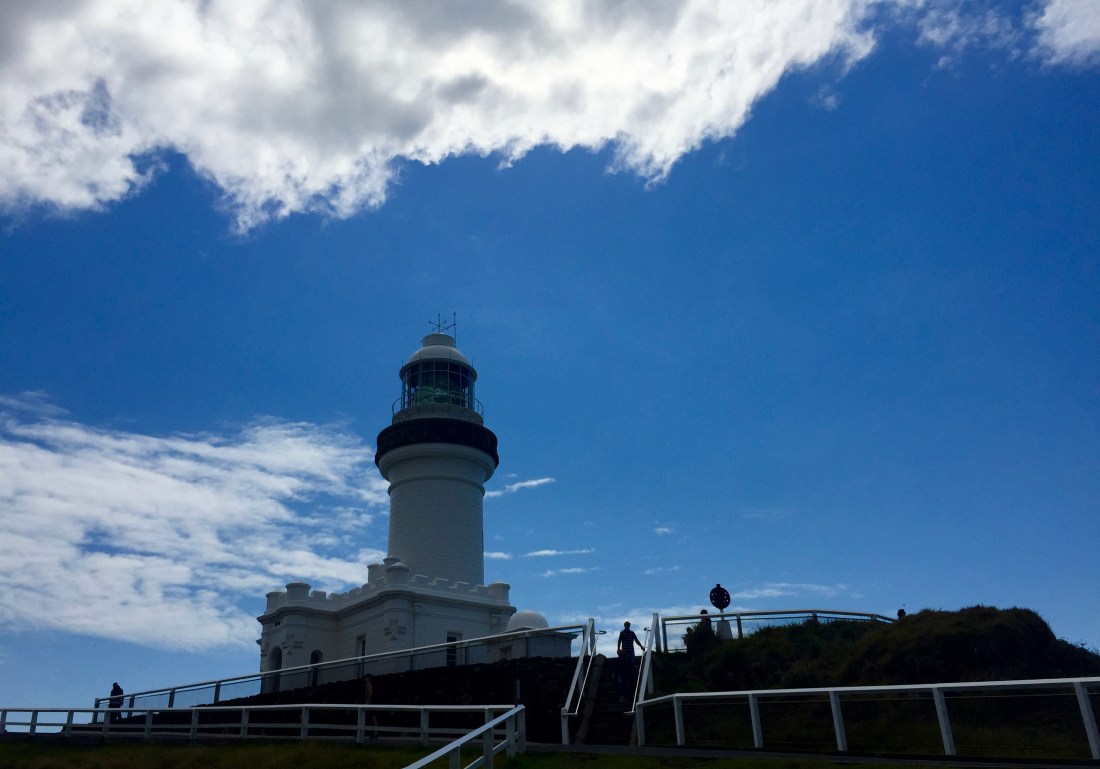
On Wednesday September 26, just a few days after our arrival in Byron Bay, our class took a trip to Cape Byron Light, located in the Arakwal National Park and were given a guided tour by Aunty Delta. We began our walk with a brief history of the land, talking about the Arakwal people and their job to protect the national park and be the custodians of country. One of the biggest themes that I caught onto while on our walk was the exploitation of aboriginal land after it was taken from the people through colonization and much later on, after there was little use for the land that was taken, it was ‘given’ back to them. Now, the land the native peoples protect is exploited for tourism. Many of the sacred spaces are used as attractions, such as the surrounding mountains that can only be climbed for specific purposes or by a certain gender. Aunty Delta voiced her disapproval that those mountains have now been compromised to travelers.

Another example that was brought up by Aunty Delta was the pond on Tallow Beach that is sacred to her people and she asked that we make an effort to not swim or use the pond for any purposes. That was interesting for me to hear because on the description of the house that is being rented for us, the pond is used as an attraction, saying after a swim in the ocean to take a dip in the pond and let the water soften your hair. From this I also remember walking past the pond on the way to the beach and there were no signs or descriptions explaining the significance and how it was sacred to the aboriginal peoples. It makes me wonder about the distribution of this knowledge and how it should be shared to everyone to make sure there is no form of disrespect.

In the readings, when talking about colonizing the land, there was a lot of mention of destruction of homes and how it connected to destruction of the land.  “Dispossession of aboriginal peoples and destruction of their villages was followed by an equally rapid deterioration in the soil” (Pascoe). This small passage became relevant when Aunty Delta talked about how the Aboriginal peoples took care of the land and “burned country small and slow to keep her healthy.” If the settlers watched them and learned and tried to understand, the soil would now have been destroyed. The aboriginal peoples took care of the land in a way that provided nutrients to the soil while getting rid of the plants that were no longer necessary. While the setters came in and made an immediate impact, clearing the land and making a man-made wilderness that the land was not ready for. Because they never learned, they destroyed.


Pascoe, B. (2014). Introduction; Chapter 1: Agriculture. In Dark Emu (pp. 11-18; 19-52). Broome, WA: Magabala Books Aboriginal Corporation.

Tavoro Waterfalls, Fiji

On September 20th, while in Waitabu, Taveuni, the IENK class took a trip to the Tavoro Waterfalls. The falls are located in the Bouma National Heritage Park and are home to three beautiful waterfalls, all located on different altitude levels. We began our walk down a long stretched valley, the path covered in grass and occasional rocks, and scattered trees around us. The sun was shining, lighting up the entire area and making it look as if the green from the grass and trees were glowing. As we were getting closer to the end of the path, I looked up and could see the small plat formed structure overlooking the valley, and knew that climbing these 400 steps would be worth it. We descended out from the open and into a more excluded area covered with trees and I could hear a waterfall in the short distance. When we approached it, we are all in awe. I have never seen a waterfall as beautiful as this one. It dropped at about 25 meters into a pool of green turquoise water. As the water connected with the sand it became increasingly shallow, exposing each rock in the crystal clear water. We were told that we would come back to this waterfall at the end to have time to swim, and with that we continued and seconds later we were at the beginning of the stairs.

I climbed at a slow pace, allowing myself to focus on my breathing and try to stay aware of my surroundings, which was hard to do because I felt my eyes were glued to the ground making sure I wouldn’t step in the wrong place. Finally, I had reached the top and was greeted by my sweaty and tired classmates who had not had the chance to shake off the steps yet. The wooden platform overlooked the entire valley, exposing the path we just walked on, some houses, a small river, and endless amounts of plants and trees. It also had a view of the beach, the waves slowly breaking, creating a truly breathtaking view.

It was announced that this would be the spot for the class to take place and everyone took seats round the area. We started the discussion with vanua and its explanations from the two readings. The word is used by indigenous Fijians and upon close examination, the author of the first reading, Hao-Li Lin uncovers its various meanings. It’s seen largely as the “environment” or “a land, or region” but goes deeper than the surface into Fijian custom and social/ kinship unit of the tribal society, as well as the linkage between communities and the physical land. For me, the beautiful thing about this word and its use, is how it is also seen as the connection between the ancestors and the land, finding a more spiritual approach. It allowed me to realize the permanency of the land people are on, how they have been there many years, knowing it was where their great grandparents grew up. The roots of a community must run so deep, giving the land a sacred value. That understanding and connection feels foreign too me, even though I’ve been in the same house my entire life, I know my parents didn’t grow up there, nor did my grandparent, nor will future kids of mine. For that reason, the house I’ve been living in feels like it is just property, to build upon, alter, and sell to another family who will do the same when they need something different.

I feel lost in my connection to land, and somewhat saddened and guilty knowing that while moving from different lands throughout my Global experience, it’s not something that even crossed my mind until now. Though after this discussion and readings, getting to understand the importance of ‘vanua’, I want to continue my journey around this world seeking the knowledge of the land and respecting who it truly belongs to.

Hao-Li, L. (2015). Vanua as Environment: Conservation, Farming and development in Waitabu, Fiji (pp. 23-33; extract). Unpublished Thesis, Doctor of Philosophy, University of Pittsburgh, USA.

The Journey Begins


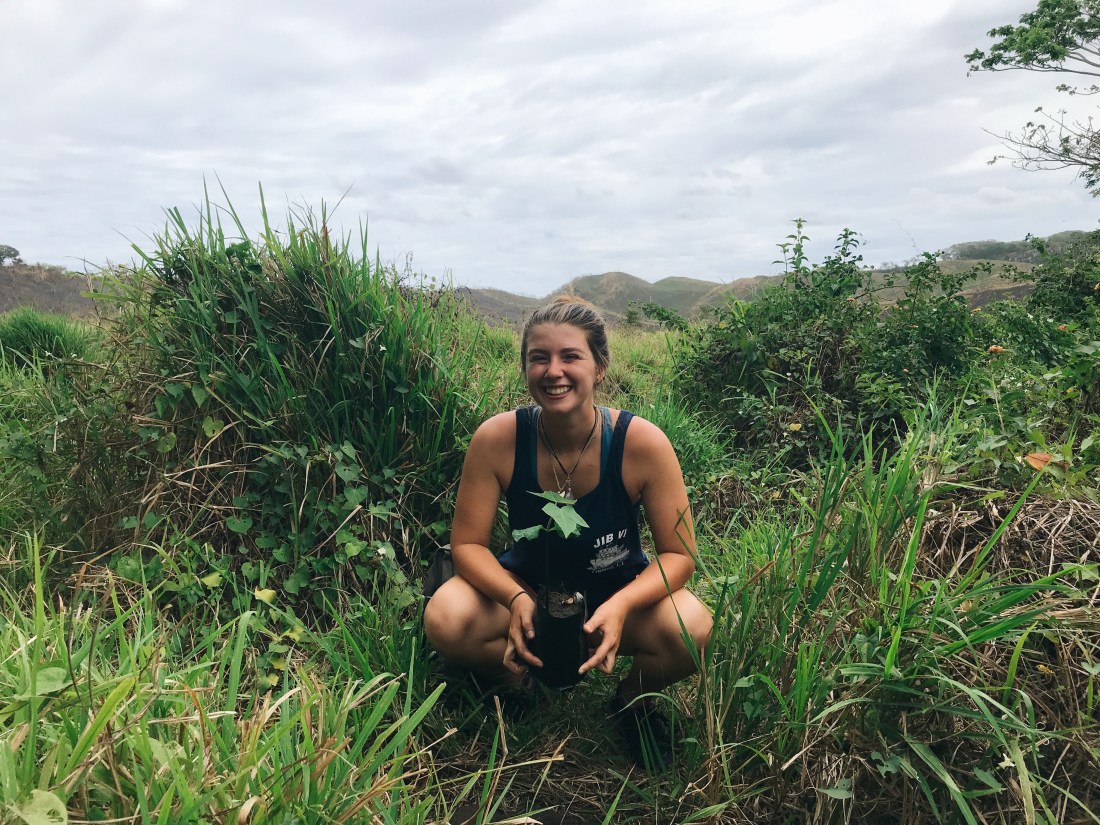
On the 6th of September, the LIU Global class took an excursion to the Sigatoka Sand Dunes National Park in Fiji. The day began with a two-hour bus ride across the south coast of Fiji, complete with beautiful views of the blue water and small communities, allowing me to get a sense of the Fijian landscape. When we arrived, we were prepared with a small introduction about Fijians first National Park by Simon, a park ranger who would be leading us though the sandy dunes and green walking tracks. He spoke about the national park being home to archeological sites and forests used by the local community for medicinal purposes. The park is managed by the National Trust of Fiji and has the job of protecting and preserving the cultural heritage site. In the introduction from Simon, we also learned that there had been a small forest fire that had burnt down some of the preserved area and with this, we would be planting a few trees that would soon grow to fill that area.

Our walk started slow and uphill, the sound of birds chirped in the background and green plants covered every surface. I was so content to finally be surrounded by nature… a concept I would later come to question. As I was breathing in the sweet and humid air, I started recalling the reading that was assigned for another class, “Na Vuku Ni Vanua- Wisdom of the Land: Aspects of Fijian Knowledge, Culture, and History”. In this reading the authors describe the idea of silence as knowledge and how sacred it is to not talk, but to listen. So I made a decision to take some time out of the walk to listen to what was around me and allow myself to feel the space. Each burst of cool air that hit my body as we reached a peak of a hill sent shivers down my spine, reminding me of the constant changes in our environment. Each step on the hot sand filled me with warmth and allowed me to feel comfort, reminding me a bit of home. My silence throughout the walk allowed me to feel and try to understand as well as just listening to what was going on around me, whether it be the wind or the rustle of the leaves or the conversations flowing between my classmates.

Before lunch, after planting our trees and making our way to the top of the dunes, we were all asked to write down our definition of nature. I had never really thought about the definition before, I always just had a vision of what nature looked like to me. I wrote untouched land, open environment, being able to find a connection with the earth that we came from. It seemed that simple in the moment and I was content with me answer. After that small break of refection and writing we continued with our time in the park by playing in the water like little kids, running from and jumping into the waves that crashed and rolled to our feet. We learned about the history of a ‘tree hugger’ and got to make our own in a group activity. After all of that was finished, we sat down where we started and revisited the idea of ‘nature’.

What is nature? A word I always thought I knew, a concrete image I always had in my head of tall green trees, wild flowers growing in every direction, a small stream that I can slightly hear when I pay attention, and a warm sweet smell of the plants around me, and in the best scenario, the sun beating down in my skin. In my head, that form of nature is untouched and pure, she grows at her own pace and wherever she likes, she has no path to follow other than her own. This is the nature I see in my eyes, which I learned could be very different from the nature another person is thinking or seeing in their eyes. I understood that as my classmates gave their answers, although some similar to mine, some very different, looking deeper into the word. I now find myself questioning nature and my romanticized vision of it. Nature does not need to be untouched, if anything most nature I am surrounded with and directed by the hands of humans, yet it is still green, still grows in the same way. And the use of the word can be used in different contexts, as in it is in our nature as humans to destroy and create. In that form nature is described as both biological DNA and societal pressures/ influences. In all honesty, I left the conversation being more confused about nature that I thought I could ever be, this word I found myself using all the time turned out to mean and not mean so much more.